

Learn how to apply Sattva – the third guna – in your daily life for greater balance, peace, & harmony…
Your mind flickers between three states every single day, and only one of them leaves you feeling truly at peace.
Ancient Ayurvedic and yogic traditions call these three forces the gunas, and understanding them might be the missing piece in your quest for balance. Sattva, the guna of purity and clarity, doesn’t just feel good, it actively protects your body from stress-related illness.
Article Summary:
- Sattva Guna balance means cultivating clarity, compassion, and calm while reducing the pull of restless Rajas and heavy Tamas energy.
- A Sattvic lifestyle, including diet and meditation, has been linked to lower body weight, better blood sugar control, and reduced cholesterol.
- Combining four simple habits, healthy weight, regular exercise, good diet, and no smoking, can slash chronic disease risk by up to 80 percent.
- Keep reading to discover seven distinct types of Sattva Guna and which one might already be shaping your personality.
What Sattva Feels Like When It Takes Hold
Picture the steady glow of a candle in a still room, unwavering and clear. That’s Sattva. When this guna dominates your inner world, compassion comes easily, your thoughts feel less cluttered, and a quiet sense of joy settles in without needing a reason. It’s not a fleeting high like excitement or a forced calm like sedation, it’s a grounded clarity that colors how you see everything else!

Image from haikudesigns.com.
People experiencing Sattvic dominance often describe their days as smoother, even when circumstances haven’t changed. The difference lies in perception. Where Rajas might make a delayed flight feel like a personal crisis, Sattva allows you to notice the frustration, breathe through it, and move on without carrying the tension into the next hour.
The Three Gunas That Shape Your Every Mood
Every thought, action, and emotional reaction traces back to one of three forces working through you at any given moment. Sattva, Rajas, and Tamas aren’t abstract philosophical ideas, they’re practical descriptions of energy states that Ayurveda has tracked for thousands of years. Recognizing which one is running the show in your life right now is the first real step toward change.
Sattva: Clarity, Compassion, and Calm
The word “Sattva” comes from the Sanskrit root “Sat,” meaning being, existence, or reality itself. In the Bhagavad Gita, Krishna describes Sattva, Rajas, and Tamas as three forces born from nature that bind the eternal soul within the body. Sattva stands apart because of its inherent qualities of balance, purity, and harmony, qualities that don’t just feel pleasant but actively support physical health and prevent lifestyle disorders.
People with a dominant Sattvic nature tend to gravitate naturally toward balanced diets, consistent exercise, and habits that nurture rather than deplete them. This isn’t willpower in the traditional sense, it’s more that clarity of mind makes healthy choices feel obvious rather than difficult.
Rajas: The Restless Drive for More
Rajas is the guna of passion, ambition, and constant movement. In small doses, it’s what gets you out of bed and drives you toward goals. Left unchecked, though, Rajas turns into a engine that never idles, fueling anxiety, impatience, and a nagging dissatisfaction no matter how much you accomplish. For more insights on managing this energy, consider balancing Rajas to achieve a more harmonious state of mind.
This matters more than most people realize. Roughly 80 percent of workers report feeling stressed, and over half feel overwhelmed in today’s fast-paced world. That collective exhaustion has a name, and it’s excessive Rajas.
Tamas: The Weight of Inertia and Fog
Tamas represents inertia, heaviness, and resistance to change. When this guna takes over, even simple tasks feel monumental. Deep lethargy sets in, along with an unwillingness to try anything new, a kind of mental fog that keeps you stuck in place.
Tamas isn’t inherently bad, rest and stability have their place. The problem arises when Tamas becomes the default state rather than a temporary pause.
Why Sattva Outperforms Rajas and Tamas for Your Health
There’s a reason Ayurvedic texts consistently rank Sattva above the other two gunas when it comes to physical wellbeing. It isn’t just spiritual preference, it’s backed by measurable outcomes in mental health, metabolic function, and hormone regulation.

Image from sattvaconnect.com.
Mental Clarity and Emotional Stability
Sattva is directly tied to mental clarity and emotional steadiness. Individuals whose lives lean Sattvic report better mood stability, sharper thinking, and fewer emotional swings. This isn’t a coincidence, it reflects a nervous system that isn’t constantly firing in fight-or-flight mode the way Rajas-dominant states often trigger.
Better Blood Sugar and Cholesterol Numbers
The physical evidence for Sattva’s benefits shows up in lab results, not just mood surveys. Research on Sattvic dietary patterns has found reductions in body weight, blood glucose levels, and cholesterol among people who adopted this way of eating.
| Health Marker | Observed Change With Sattvic Diet |
|---|---|
| Body Weight | Reduction reported |
| Blood Glucose | Lowered levels observed |
| Cholesterol | Decreased levels noted |
| Mental Well-Being | Improved mood stability |
These aren’t marginal changes. When your diet emphasizes fresh, whole foods over processed and heavily spiced options, your body responds with measurable metabolic improvements, not just a vague sense of feeling better.
Hormonal Balance Through Cortisol and Insulin Regulation
One of the more compelling findings involves neuroendocrine stability. A study by Jena and colleagues in 2018 revealed that Sattvic habits promote better hormonal regulation, specifically involving cortisol and insulin, two hormones that govern stress response and blood sugar control. When these hormones stay balanced, the body avoids the chronic inflammation and insulin resistance that pave the way toward conditions like type 2 diabetes.
This connection between mental state and hormonal health illustrates why Sattva isn’t just a philosophical concept, it’s a physiological reality with consequences for how your body ages and functions over decades, not just how you feel today. For those looking to balance their mental state, exploring yoga practices like yoga to calm down & balance Rajas can be beneficial.
What Happens When Your Gunas Fall Out of Balance
Balance isn’t a fixed destination, it’s something you either maintain or lose track of day by day. When one guna takes over for too long, the effects ripple through your mood, your relationships, and eventually your physical health. For example, if rajas, the guna of action, becomes dominant, it can lead to restlessness and stress.
Losing Touch With Inner Wisdom
When Sattva’s influence fades into the background, something subtle but significant happens, you become less connected to your own inner wisdom. Compassion feels harder to access. Understanding others, and even yourself, starts to feel like more effort than it should. This disconnection often creeps in slowly, which is exactly why it’s easy to miss until you’re already several weeks into feeling “off.”
Burnout From Excess Rajas
Too much Rajas doesn’t announce itself as a problem right away, it often masquerades as productivity. But heightened anxiety, impatience, and a persistent sense that nothing is ever quite enough are telltale signs this guna has overstayed its welcome. The constant striving eventually collapses into exhaustion, because a nervous system can only run in high gear for so long before it demands a reset.
Apathy and Hopelessness From Excess Tamas
On the opposite end, excess Tamas brings a different kind of suffering. Deep lethargy sets in, along with a stubborn resistance to anything new. Getting off the couch feels like climbing a mountain, and the motivation to change often disappears entirely. Left unaddressed, this state can spiral into a heaviness that touches every part of daily life, from relationships to work to basic self-care.
Meditation Practices That Build Sattvic Energy
Meditation isn’t just a nice-to-have wellness trend, it’s one of the most direct paths back to Sattva. This practice creates space for clarity and tranquility precisely because it interrupts the automatic thought patterns that Rajas and Tamas thrive on. The stillness meditation cultivates isn’t passive, it’s an active state of heightened awareness that lets you observe your mind rather than being controlled by it.

Image from www.arhantayoga.org.
Regular sessions amplify Sattvic qualities over time, and the changes compound. Someone who meditates consistently for a few months often reports feeling less reactive to stress, more patient with people around them, and generally clearer in their decision-making. This isn’t magic, it’s the natural result of training your nervous system to default toward calm rather than chaos.
Daily Meditation for Deeper Clarity
Consistency matters more than duration when it comes to meditation’s Sattvic benefits. Even ten focused minutes each morning can shift your baseline state throughout the day. The key is showing up regularly rather than searching for a perfect hour-long session that never quite fits into your schedule.
Mindful Breathing to Tame Rajasic Restlessness
When Rajas has you feeling wired and scattered, mindful breathing offers an immediate anchor. Slowing your breath down, extending the exhale longer than the inhale, signals to your nervous system that it’s safe to downshift out of that restless, driven state. This technique works because it bypasses the thinking mind entirely, going straight to the body’s stress response and calming it from the inside out.
Guided Visualization to Lift Tamasic Heaviness
Tamasic heaviness responds well to guided visualization, mentally journeying to vibrant landscapes, climbing a mountain path, or walking through a sunlit forest. These mental images counter the inertia and fog of excess Tamas by giving the mind something vivid and energizing to focus on. It’s a gentle way to coax yourself out of stagnation without forcing a dramatic shift you’re not ready for.
Eat Your Way to Sattva: Foods That Help and Hurt
What you put on your plate does more than fuel your body, it directly shapes which guna dominates your mental state. Ayurvedic tradition has long recognized this connection, categorizing foods based on the energy they carry and the effects they produce once digested.
This isn’t about strict rules or deprivation. It’s about understanding that fresh, whole foods genuinely make you feel different than processed, heavily spiced, or leftover meals, and using that knowledge to nudge your daily choices toward balance.
Sattvic Foods: Fresh, Whole, and Alive
Sattvic foods carry what Ayurveda calls prana, or life force. Fresh, organic, lightly cooked vegetables top the list, alongside whole grains and dairy products like milk and ghee. These foods share a common thread, they’re minimally processed and close to their natural state, which seems to translate directly into the clarity and tranquility they help produce in the body and mind. For more insights, you can explore these Ayurvedic tips for a harmonious lifestyle.
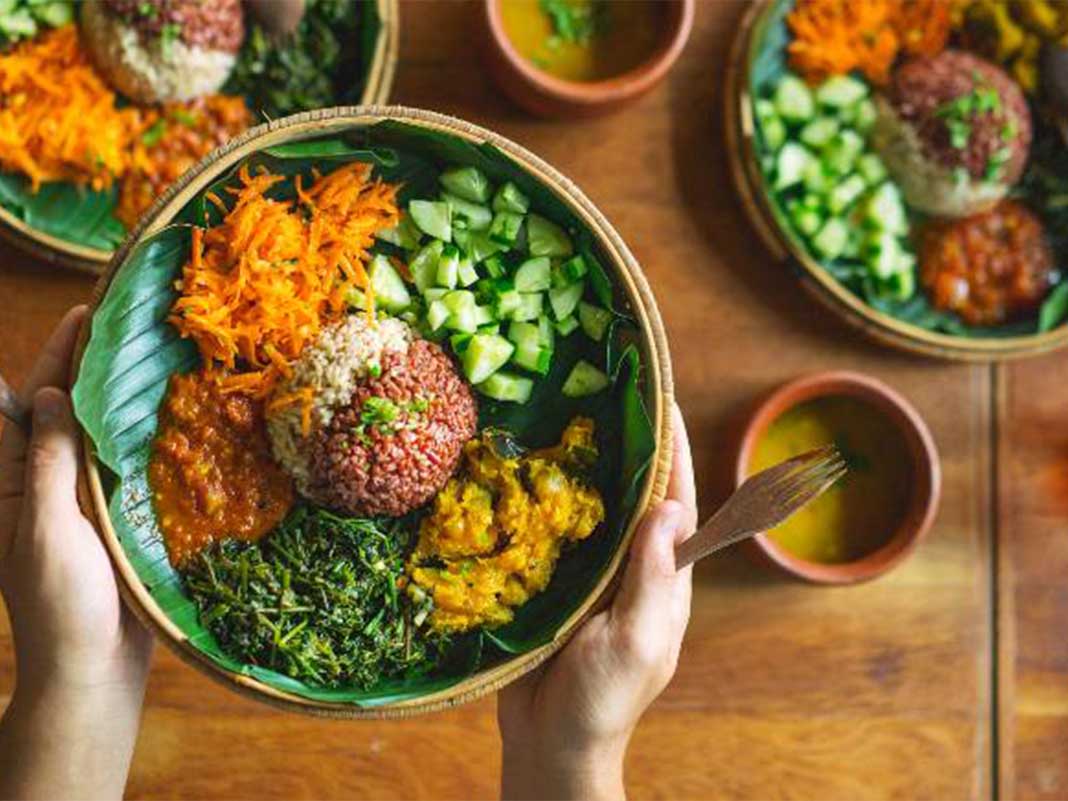
Image from jansankalp.org.
Rajasic Foods to Limit
Rajasic foods stimulate and excite, think spicy, salty, and tangy dishes alongside caffeinated beverages. These foods aren’t forbidden, but relying on them heavily tends to feed the restless, agitated energy that Rajas already brings to the table. Moderation here matters more than elimination.
Tamasic Foods That Drain Your Energy
Processed foods, leftovers, excessive meat consumption, and alcoholic beverages fall into the Tamasic category. These foods amplify the heaviness and inertia associated with Tamas, leaving you feeling sluggish rather than nourished. Cutting back on these items, even gradually, tends to free up mental and physical energy that was previously being spent on digestion and recovery.
Daily Habits That Keep Your Gunas in Check
Diet and meditation matter, but the rhythm of your entire day plays an equally important role in which guna takes charge. Small, consistent habits stack up over time, shaping your baseline state far more than any single dramatic change ever could.
The good news is that these habits don’t require a complete lifestyle overhaul. Most involve small adjustments to routines you already have, timed and structured in ways that naturally support Sattva.
Morning Routines That Set a Sattvic Tone
Rising with the sun rather than fighting against a snooze button gives your body a head start toward Sattvic balance. Morning rituals like self-massage with warm oils, followed by quiet time for contemplation, create a buffer before the day’s demands take over. This isn’t about waking up at an extreme hour, it’s about aligning your rhythm with natural light cycles instead of working against them.
Adding activities like reading uplifting literature or spending even fifteen minutes outdoors in the morning air reinforces this Sattvic foundation before the rest of the day introduces its usual chaos.
Productive Outlets for Rajasic Energy
Rajas doesn’t need to be suppressed, it needs to be channeled. Setting clear intentions before starting work, then engaging in focused sessions followed by deliberate breaks, lets that driven energy accomplish something useful instead of spinning in circles. Physical activities like brisk walking or cardiovascular exercise also give Rajas somewhere productive to go, transforming restlessness into genuine accomplishment.
Movement and Sunlight to Break Tamasic Lethargy
Countering Tamasic inertia starts with movement, even when motivation is the last thing you feel. A brisk walk first thing in the day, combined with time spent under natural sunlight, interrupts the heaviness before it fully sets in. Physical exertion works almost like a reset button, waking up systems that Tamas would otherwise keep dormant.
Connection and Community as a Balancing Force
Human connection plays a bigger role in guna balance than most people give it credit for. Meaningful conversations, quality time with loved ones, and participation in community activities all pull you out of isolation, whether that isolation stems from Rajasic overdrive or Tamasic withdrawal. These moments of genuine connection tend to naturally restore Sattvic warmth and perspective.
None of these habits work in isolation. A morning walk paired with a nourishing breakfast and a few minutes of quiet reflection does more for your guna balance than any single practice attempted alone.

Image from beyogi.com.
How Sattva Guards Against Modern Lifestyle Diseases
- Non-communicable diseases accounted for approximately 74 percent of total global mortality in 2018, according to the World Health Organization.
- The obesity rate in India currently stands at 40.3 percent, with a significant rise in overweight and obesity anticipated by 2040.
- Around 537 million adults worldwide, roughly 10.5 percent of the global population aged 20 to 79, are affected by diabetes.
- Approximately 54.5 million individuals in India were estimated to be affected by cardiovascular disease as of 2016.
These numbers paint a sobering picture, but they also point toward a solution hiding in plain sight. A Sattvic lifestyle offers a holistic strategy for prevention that goes well beyond dietary guidelines, extending into mindful living and genuine emotional wellbeing.
The brain sits at the center of this equation, acting as the orchestrator behind neuroendocrine function, metabolism, stress response, and overall energy balance. When Sattvic habits take root, they influence the brain’s regulatory processes directly, supporting hormonal stability and reducing the chronic inflammation that so often precedes lifestyle disease.
This connection between mental state and physical outcome isn’t speculative, it shows up in real health markers across populations practicing Sattvic principles consistently over time.
The Rising Toll of Obesity, Diabetes, and Heart Disease
Diabetes projections alone should give anyone pause, cases are expected to climb from 537 million currently to 643 million by 2030, then to 783 million by 2045. Cardiovascular disease tells a similarly urgent story, with one out of every four deaths in India now attributed to conditions like ischemic heart disease and stroke.
Obesity compounds these risks further. Over 4 million people died in 2017 as a direct result of being overweight or obese, according to the global burden of disease report. These aren’t abstract statistics, they represent a modern epidemic driven largely by lifestyle factors that Sattvic living directly addresses.
What makes this connection so compelling is that Sattva doesn’t treat these conditions as isolated problems requiring separate interventions. Instead, it approaches health as an interconnected system where stress, diet, sleep, and emotional wellbeing all feed into the same outcome.
A study by Saboo and colleagues in 2023 found that combining Sattvic diets with yoga and meditation reduced cardiovascular risk factors measurably, reinforcing that this isn’t just philosophy, it’s a practical framework with real clinical relevance.
- Controllable risk factors include diet, body weight, physical activity levels, sun exposure, smoking, and alcohol intake.
- Uncontrollable factors include age, gender, ethnicity, and heredity, elements Sattvic living can’t change but can help you manage more gracefully.
Four Simple Habits That Cut Chronic Disease Risk by 80%
Here’s a statistic worth remembering, combining four healthy lifestyle factors, maintaining a healthy weight, exercising regularly, following a nutritious diet, and avoiding smoking, is associated with as much as an 80 percent reduction in risk for common and deadly chronic diseases. That number alone should reframe how you think about daily choices.
None of these four habits require extreme measures. They align almost perfectly with the Sattvic lifestyle already outlined throughout this article, fresh food, consistent movement, and a mind clear enough to make choices that serve long-term wellbeing rather than momentary comfort.
Mindful Eating as a Natural Weight Regulator
Mindful eating, a cornerstone of Sattvic living, promotes awareness of hunger cues in a way that naturally averts overeating. Rather than eating on autopilot while distracted, this practice asks you to actually notice when you’re satisfied, which sounds simple but proves remarkably effective at preventing the excess calorie intake that drives weight gain.
The Sattvic diet provides essential nutrients while naturally mitigating the risk of overconsumption, largely because whole, fresh foods tend to be more satisfying per calorie than processed alternatives. Add stress reduction through meditation and yoga into the mix, and you’re addressing obesity from both the nutritional and psychological angles simultaneously.
This dual approach matters because chronic stress itself has a well-documented role in weight gain, through cortisol dysregulation and its effects on appetite and fat storage. Sattva doesn’t just tell you what to eat, it addresses the underlying stress patterns that often drive poor eating choices in the first place.
- Sattvic diets have been linked to improved insulin sensitivity and reduced inflammation, both protective against type 2 diabetes.
- Neuroendocrine stability from Sattvic habits supports better hormonal regulation of cortisol and insulin over time.
- Combining dietary changes with meditation and yoga produces measurably better outcomes than diet alone.

Image from explorevedanta.com.
Seven Distinct Forms of Sattva Guna
Not all Sattva looks the same. Ayurvedic tradition breaks this guna down into seven distinct expressions, each carrying its own personality traits and strengths. Recognizing which form resonates most with you can offer a surprisingly precise mirror for understanding your natural tendencies.
These categories aren’t rigid boxes, most people carry traces of several types. But one or two usually stand out as the dominant pattern shaping how you move through the world. For more insights, you can explore Sattva’s role in lifestyle disorders.
1. Brahma Sattva: Free From Anger and Greed
Brahma Sattva describes individuals free from negative emotions like anger, greed, ignorance, or jealousy. People with this type of Sattva possess sound knowledge and an excellent power of discrimination, meaning they naturally sort through complex situations with clear judgment rather than emotional reactivity.
This form often shows up in people others turn to for advice, not because they demand attention, but because their perspective consistently cuts through confusion without personal agenda clouding the picture.
2. Arsha Sattva: Ego-Free Self-Control
Arsha Sattva is marked by freedom from pride and ego, paired with strong self-control. Individuals expressing this type possess a good power of understanding and retention, absorbing information and experiences without needing to filter everything through how it reflects on them personally.
This combination of humility and mental sharpness tends to produce people who learn quickly and adapt gracefully, since ego rarely gets in the way of admitting what they don’t yet know.
Self-control here isn’t about suppression, it’s about a natural steadiness that doesn’t require constant willpower to maintain.
3. Aindra Sattva: Devotion and Authority
Aindra Sattva involves deep devotion to sacred texts and spiritual practice, paired with authoritative speech and behavior. People expressing this form often carry a natural gravitas, their words holding weight not because they demand respect, but because their conviction feels genuine and grounded.
4. Yamya Sattva: Memory and Leadership
Yamya Sattva is free from mean and conflicting desires, and it comes paired with excellent memory and strong qualities of leadership. This combination tends to produce people others naturally follow, since clarity of purpose and reliable recall make their guidance feel trustworthy. To further understand how different qualities influence behavior, you might want to explore the concept of Transcending Tamas, another important Guna.
5. Varuna Sattva: Discipline and Emotional Balance
Varuna Sattva is free from mean acts and expresses emotions well, with extreme discipline toward cleanliness and a genuine distaste for messiness or disorder. This type reflects an internal order that mirrors outward in tidy spaces and structured routines.
People with strong Varuna Sattva often find that maintaining physical order in their environment directly supports their mental clarity, the two reinforce each other rather than existing separately.
6. Kubera Sattva: Courage and Purity
Kubera Sattva describes freedom from impure thoughts alongside good courage. Individuals with this type express emotions like anger and pleasure at the right place and time, meaning their emotional responses feel appropriately calibrated rather than either suppressed or excessive.
This balanced emotional expression often reads as authenticity to others, since nothing about their reactions feels performed or forced.
7. Gandharva Sattva: Artistic Detachment
Gandharva Sattva is marked by freedom from attachment to wealth and luxury, paired with genuine expertise in performing arts like poetry, singing, or dance. This type channels creative energy without needing external validation or material reward to fuel the pursuit. To explore more on the broader concept of Sattva, visit this insightful article.
Sattva Is Your Shield Against Modern Chaos
Modern life throws constant pressure toward Rajasic overdrive or Tamasic collapse, rarely offering a natural pause toward Sattva without deliberate effort. That’s exactly why building these habits matters more now than perhaps any point in recent history.
The path back to Sattva doesn’t require perfection, it requires consistency. A few minutes of meditation, one more serving of fresh vegetables, a short walk in morning sunlight, these small choices accumulate into a state of clarity and calm that no amount of willpower alone could force into existence.

Image from www.rishikulyogshala.org.
Frequently Asked Questions
How Do I Know Which Guna Dominates My Life Right Now?
Pay attention to your default emotional state over the past few weeks rather than any single bad day. Constant restlessness and dissatisfaction point toward Rajas, while persistent lethargy and resistance to change signal Tamas.
If you notice mental clarity, compassion, and a steady sense of calm underlying most of your days, Sattva is likely holding the reins already, even if stress occasionally pulls you off course.
Can I Switch From Tamas to Sattva in a Single Day?
Not entirely, but you can absolutely shift momentum within a single day. A brisk morning walk, time in sunlight, and a fresh meal instead of leftovers can noticeably lighten Tamasic heaviness by afternoon, even if full Sattvic balance takes longer to establish.
Is a Sattvic Diet the Same as Being Vegetarian?
Not exactly. While Sattvic foods lean heavily toward fresh vegetables, whole grains, and dairy, the emphasis is really on freshness, minimal processing, and how lightly the food is prepared rather than strict avoidance of any single food group.
How Long Does It Take to Feel the Benefits of Sattvic Living?
Some effects, like the calm that follows a single meditation session, show up almost immediately. Deeper changes, like improved blood sugar or cholesterol levels, tend to take weeks or months of consistent practice before showing up in measurable ways.
Patience matters here. The goal isn’t a quick fix, it’s building a foundation that supports long-term wellbeing rather than a temporary mood boost.
Can Rajas Ever Be a Good Thing?
Absolutely! Rajas provides the drive and ambition needed to pursue goals and get things done. The problem only arises when Rajas runs unchecked, without the grounding influence of Sattva to keep that energy purposeful rather than scattered.
Think of Rajas as fuel and Sattva as the steering wheel, one without the other leaves you either stuck in place or speeding toward burnout. For a balanced approach, explore this yoga routine to calm down and balance Rajas.
Sattva isn’t a destination you reach once and forget, it’s a daily practice worth returning to again and again.
Featured Image from sattvaconnect.com.


