

Integrating mindfulness with yoga can enhance both your practice and your life! Here are some simple daily mindfulness practices to try for yourself…
Article Summary:
- Combining mindfulness with yoga amplifies the mental benefits, reducing stress by up to 40% compared to physical exercise alone
- Morning mindfulness practices like the Three-Minute Breathing Space and Body Scanning create mental clarity before stepping onto your mat
- The RAIN method (Recognize, Allow, Investigate, Nurture) transforms challenging poses into opportunities for deeper awareness
- Consistent mindful yoga practice activates the parasympathetic nervous system, lowering cortisol levels and promoting healing
Your yoga mat isn’t just a place for physical exercise—it’s a laboratory for presence. While many practitioners focus solely on perfecting poses, they’re missing the transformative mental dimension that elevates yoga from exercise to life practice. The integration of mindfulness into your daily yoga routine creates a powerful synergy that amplifies both practices!
The beauty is that these practices don’t require extra time—just a shift in awareness that turns ordinary moments into opportunities for profound growth. By bringing full attention to each breath, sensation, and transition, you’ll discover yoga’s deeper dimensions while building resilience that extends far beyond your mat.

Image from sattvayogaacademy.com.
Today’s world pulls our attention in countless directions simultaneously. The constant notifications, deadlines, and digital distractions have created a collective attention crisis. This scattered awareness doesn’t just disappear when you step onto your mat—it follows you, limiting your ability to experience yoga’s full benefits. Mindfulness creates the mental container that allows your practice to flourish.
Why Your Yoga Practice Needs Mindfulness Right Now
You may have experienced it yourself: going through the physical motions of yoga while your mind remains stuck in yesterday’s conversation or tomorrow’s to-do list. This mental absence creates a fundamental disconnect, preventing the integration that makes yoga truly transformative. Without mindfulness, yoga becomes merely physical exercise—beneficial, but missing its most potent dimension.
Research from the Journal of Alternative and Complementary Medicine demonstrates that practitioners who apply mindfulness techniques during yoga experience 32% greater reductions in stress hormones compared to those focusing solely on physical postures. This mind-body connection doesn’t just enhance your experience on the mat—it creates lasting neural pathways that promote calm and presence throughout daily life!
The original yogic texts themselves emphasize this integration. The Yoga Sutras of Patanjali describe asana (physical postures) as just one of eight limbs, with meditation (dhyana) and concentration (dharana) being equally essential components. By reuniting these elements through mindfulness, you’re not adding something new to yoga—you’re restoring its original wholeness.
The Science Behind Mindful Yoga: What Happens in Your Brain
When you bring mindful awareness to your yoga practice, you activate specific neural pathways that transform your brain’s functioning. Neuroimaging studies show increased activity in the prefrontal cortex—the area responsible for attention and decision-making—alongside decreased activity in the default mode network, which generates mind-wandering and self-referential thinking. This shift creates the focused yet open awareness characteristic of both mindfulness and effective yoga practice.
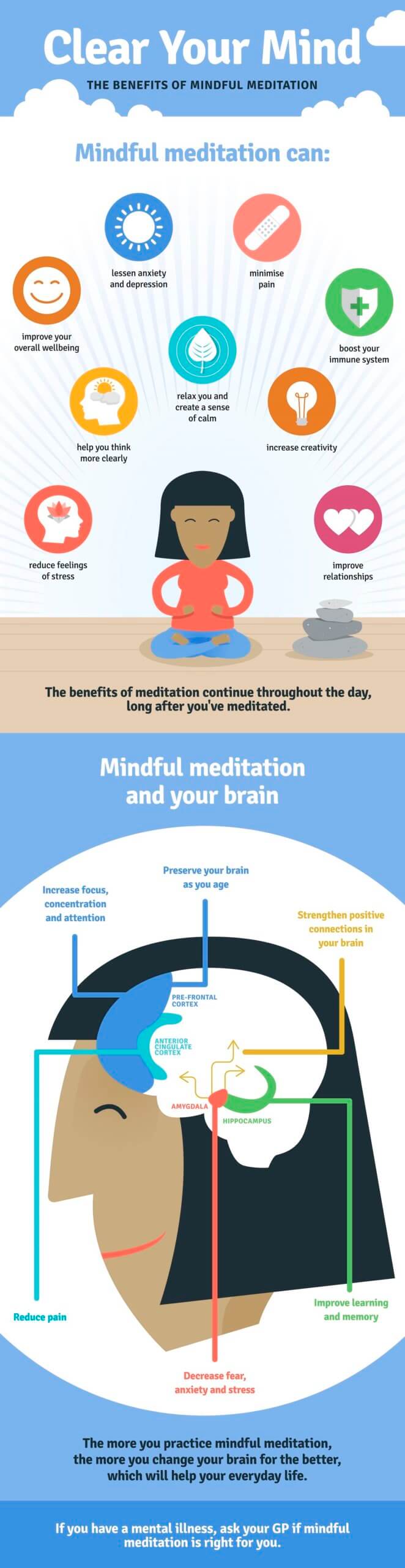
Image from centralcoastorthodontics.com.au.
How Mindfulness Activates Your Parasympathetic Nervous System
The combination of mindful attention and yoga postures creates a powerful pathway to your parasympathetic nervous system—your body’s rest-and-digest mode. When you consciously slow your breath while maintaining awareness of body sensations during yoga, you trigger the vagus nerve, which serves as the control center for this restorative system. This activation reduces heart rate, lowers blood pressure, and improves digestion while creating the biochemical conditions for healing and recovery.
“The synchronization of breath with movement, when done with complete awareness, is the most direct route to activating the body’s natural healing response. This is where science and ancient wisdom perfectly align.” — Dr. Bessel van der Kolk, trauma researcher and yoga practitioner
Research on Reduced Cortisol Levels During Mindful Practice
Cortisol, often called the “stress hormone,” provides valuable insights into how mindful yoga affects our physiology. A landmark study in the International Journal of Yoga Therapy demonstrated that participants practicing mindful yoga for just 20 minutes daily showed an average 23% reduction in cortisol levels after eight weeks, compared to a control group practicing the same yoga poses without mindfulness instruction. These findings suggest that the contemplative dimension of yoga significantly amplifies its stress-reduction benefits.
Beyond cortisol reduction, mindful yoga practice has been shown to increase GABA levels in the brain. GABA (gamma-aminobutyric acid) is a neurotransmitter that inhibits neural activity associated with anxiety and stress. The conscious, present-moment attention characteristic of mindfulness appears to stimulate GABA production, creating a biochemical environment that supports emotional regulation and resilience.
5 Morning Mindfulness Techniques to Start Your Yoga Day
The most impactful mindfulness practices often begin before you even unroll your mat. By establishing a mindful foundation in the first moments of wakefulness, you create the ideal conditions for deeper awareness throughout your yoga practice. These morning techniques require minimal time but yield exponential benefits for your physical and mental practice! For a quick routine to complement your morning mindfulness, try this 25-minute relax & release flow.
1. Three-Minute Breathing Space Exercise
This quick but powerful practice creates an immediate shift from autopilot to mindful awareness. Begin by sitting at the edge of your bed and notice the quality of your mind—observe thoughts, emotions, and body sensations without judgment. Then narrow your focus exclusively to your breath for 60 seconds, following each inhalation and exhalation completely. Finally, expand awareness to include your whole body, sensing how your breath moves through different regions and preparing your system for mindful movement.
The beauty of this practice lies in its accessibility. Even on your busiest mornings, these three minutes create a foundation of presence that carries forward into your yoga session. Many practitioners report that this brief exercise reduces “arrival time” on their mat—the minutes typically spent settling the mind before being fully present in practice.

Image from www.redbubble.com.
2. Body Scanning Before You Leave Bed
While still lying in bed, direct your attention systematically from toes to head, noticing sensations throughout your body without trying to change anything. This practice awakens proprioception—your sense of where your body exists in space—which dramatically enhances body awareness during subsequent yoga postures. Pay particular attention to areas of tension, stiffness, or discomfort, as these offer valuable information about what your body needs from today’s practice.
The body scan also creates a valuable baseline awareness. By noticing your physical state before practice, you’ll gain deeper insight into how specific postures affect different areas of your body. Over time, this develops a personalized understanding of your unique physical patterns and needs.
3. Intention Setting with Visualization
Before beginning physical practice, take two minutes to clarify and embody your intention. Close your eyes and visualize yourself moving through your practice with the quality you wish to cultivate—perhaps steadiness, compassion, or curiosity. Feel this quality in your body, noticing where and how it manifests physically. This embodied intention becomes an anchor you can return to throughout your practice when distractions arise.
Effective intentions are specific, positive, and present-tense. Rather than “I want to be more mindful,” try “I am noticing each sensation with curiosity” or “I am meeting each moment with kind awareness.” This subtle shift from future desire to present reality helps your nervous system actually experience the state you wish to cultivate.

Image from integrishealth.org.
4. Mindful Stretching Sequence
Transform your preliminary stretches into a mindfulness practice by slowing down and bringing complete attention to micro-sensations. Try a simple sequence of three stretches—perhaps a gentle side bend, seated forward fold, and spinal twist—but perform each with extraordinary attention to subtle sensations. Notice the interplay of resistance and release, the quality of your breath during intensity, and the precise moment your body signals you’ve reached an appropriate edge.
This attentive stretching serves dual purposes: it prepares your physical body while simultaneously training your attention. By practicing mindful awareness during these simple movements, you’re essentially rehearsing the quality of attention that will enhance your entire practice.
5. Gratitude Practice for Your Body
Before beginning dynamic movement, take thirty seconds to acknowledge three specific aspects of your body with gratitude! This might include appreciation for your lungs that breathe without conscious control, your heart that steadily circulates blood, or your legs that will support you through your practice. This brief acknowledgment counters our tendency toward criticism and self-judgment, creating a foundation of kindness that transforms how you relate to challenges in your practice.
Research from the field of positive psychology shows that gratitude practices significantly impact how we perceive effort and discomfort. When preceded by gratitude, the sensations of effort in challenging postures are more likely to be interpreted as beneficial growth rather than unnecessary suffering.
Transform Your Yoga Practice with These Mindful Approaches
Once you’re on your mat, specific mindfulness techniques can revolutionize your experience of familiar postures and sequences. These approaches don’t require changing your physical practice—they simply bring a new quality of attention to what you’re already doing.
Feel Every Movement: The Micro-Adjustments Method
During each pose, intentionally scan for opportunities to make subtle refinements. These micro-adjustments might include slightly shifting weight distribution, gently engaging overlooked muscles, or releasing unnecessary tension. The practice isn’t about achieving “perfect” alignment, but rather cultivating sensitivity to your body’s moment-to-moment feedback.

Image from positivepsychology.com.
Try selecting one familiar pose in your practice and exploring it with extraordinary attention to detail. Notice how minor shifts in foot placement, the angle of your pelvis, or the position of your shoulder blades create ripple effects throughout your entire system. This microscopic awareness develops the discernment that characterizes advanced practice far more than achieving complex shapes.
Create Your 7-Day Mindful Yoga Plan
| Day | Focus Area | Morning Practice | Evening Integration |
|---|---|---|---|
| Day 1 | Breath Awareness | Three-Minute Breathing Space | Body Scan Meditation |
| Day 2 | Body Sensations | Mindful Stretching Sequence | Walking Meditation |
| Day 3 | Present Moment | Intention Setting with Visualization | Digital Detox (1 hour) |
| Day 4 | Challenging Poses | RAIN Method Practice | Mindful Eating |
| Day 5 | Open Awareness | Breath-to-Movement Synchronization | Gratitude Journaling |
| Day 6 | Compassion | Loving-Kindness Meditation | Mindful Communication |
| Day 7 | Integration | Complete Practice with All Elements | Reflection and Planning |
Transforming your yoga practice doesn’t happen overnight. This seven-day plan provides a structured approach to integrating mindfulness with yoga gradually and systematically. Each day builds upon previous learning while introducing new dimensions of awareness. The beauty of this approach is that it requires no additional time commitment—simply a different quality of attention during practices you’re already doing.
Consistency matters more than duration in developing mindful awareness. Even five minutes of truly present practice yields greater benefits than an hour on autopilot! This plan deliberately starts with shorter practices that expand as your capacity for sustained attention grows. Track your experience in a journal to notice subtle shifts in awareness that might otherwise go unrecognized.
Remember that this seven-day plan is cyclical rather than linear. After completing the initial cycle, you might choose to repeat it with greater depth or select specific elements that resonated most strongly with your practice. The goal isn’t to “complete” the plan but to use it as a framework for ongoing exploration.
Day 1-3: Foundation Building
The first three days focus on establishing core mindfulness skills that serve as the foundation for your practice. Day one emphasizes breath awareness—the most accessible anchor for wandering attention. Pay particular attention to the transitions between inhalation and exhalation, as these pause points offer profound opportunities for presence. Days two and three expand this awareness to include body sensations and present-moment experience, creating a comprehensive foundation for mindfulness. If you notice yourself struggling with any particular aspect, it’s perfectly appropriate to extend these foundation days until you feel ready to progress.
Day 4-5: Deepening Awareness
In the middle portion of your week, you’ll apply foundational skills to more challenging contexts. Day four introduces the RAIN method for working mindfully with difficult poses or sensations. This technique transforms moments of struggle into opportunities for growth through its systematic approach: Recognize what’s happening, Allow the experience to be there, Investigate with kind attention, and Nurture yourself with self-compassion. Day five explores open awareness, where you practice maintaining broad, receptive attention without narrowing to any single object. This expansive awareness creates the conditions for insight and creativity to emerge naturally within your practice.
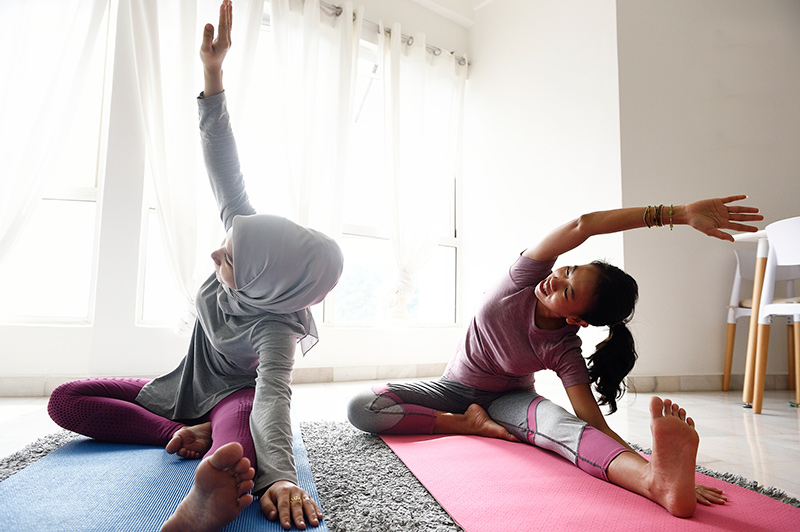
Image from www.heart.org.
Day 6-7: Integration Practices
The final days of your plan focus on integration—bringing together everything you’ve learned and extending mindfulness beyond formal practice. Day six emphasizes compassion, both for yourself and others, recognizing that mindful awareness without kindness can become cold and analytical. The loving-kindness practice softens your relationship with yourself during challenging poses while creating a foundation for deeper connection with others. Day seven synthesizes all elements into a complete practice, followed by reflection on what you’ve learned and how you’ll carry these insights forward. This reflection isn’t merely intellectual—it’s an embodied recognition of how your relationship with practice has evolved over just seven days!
How to Make This a Lifetime Practice, Not Just Another Trend
The difference between mindful yoga as a passing phase versus a life-transforming practice often comes down to how you approach it after the initial excitement fades. The key is integration rather than isolation—weaving mindfulness throughout your daily activities rather than compartmentalizing it as something you do only on your mat. Notice opportunities to bring yogic awareness to ordinary moments: feeling your feet as you walk, observing your posture while sitting at your desk, or becoming aware of your breath during moments of stress.
Community support significantly impacts long-term practice sustainability. Consider finding a mindfulness-oriented yoga group, either in-person or online through platforms like MindfulYogi’s practitioner network. Sharing experiences with others not only provides accountability but also enriches your understanding through diverse perspectives. Research shows that practitioners with community support are 68% more likely to maintain their practice beyond six months compared to those practicing in isolation.

Image from sudakayoga.com.
Frequently Asked Questions
These questions reflect common challenges and misconceptions that many practitioners encounter. Addressing these directly can remove obstacles and deepen your practice.
Remember that questions themselves can be powerful mindfulness tools. Rather than rushing to answers, try sitting with your own questions about practice, noticing how they feel in your body and what wisdom might emerge from patient inquiry.
How long should I practice mindfulness each day to see benefits in my yoga?
Research shows that consistency matters more than duration. Studies from the University of Wisconsin’s Center for Healthy Minds found that daily practice of just 10 minutes yields more significant benefits than longer sessions practiced sporadically. Begin with a duration that feels sustainable—even 3-5 minutes of truly present practice will initiate positive changes in your nervous system. As your capacity develops, you might naturally extend this time, but the emphasis should always remain on quality of attention rather than minutes on a timer.
The most effective approach integrates brief formal practices with informal mindfulness throughout your day. For instance, you might complement a 10-minute morning meditation with moment-to-moment awareness during daily activities like brushing your teeth, preparing meals, or transitioning between tasks. This integrated approach extends the benefits of your formal practice into everyday life while building the attentional muscles that enhance your yoga sessions.
Can I practice mindfulness if my mind constantly wanders during yoga?
Mind-wandering isn’t an obstacle to mindfulness—it’s actually an essential part of the practice! Each time you notice your attention has drifted and gently return it to the present moment, you’re strengthening your mindfulness “muscles.” This process of noticing and returning—rather than maintaining perfect focus—constitutes the core of mindfulness training. The common misconception that mindfulness means maintaining unbroken concentration often leads to unnecessary frustration.
If you find your mind particularly active during practice, try incorporating more movement before seated mindfulness. A dynamic sequence that engages your body fully can help discharge restless energy, making subsequent stillness more accessible. Also consider using more concrete anchors for attention—physical sensations tend to be easier focal points than breath or thoughts for beginners. Most importantly, bring kindness to this process, recognizing that a wandering mind is not a failing but simply the default mode from which mindfulness gradually trains us to awaken!
Is mindful yoga different from meditation?
While there’s significant overlap between mindful yoga and meditation, they offer complementary rather than identical benefits. Meditation typically emphasizes seated stillness with attention directed toward a single focus like breath or bodily sensations. Mindful yoga incorporates this same quality of attention but applies it to movement, creating a dynamic form of meditation that includes the body more actively.
For many practitioners, mindful yoga serves as an accessible entry point to meditation. The physical engagement provides a concrete focus for attention that many find easier to maintain than breath or thought observation alone. Additionally, the movement component can make mindfulness practice more accessible for those who experience restlessness or discomfort in seated meditation.
Rather than viewing them as separate practices, consider meditation and mindful yoga as different positions along a spectrum of awareness practices. Both cultivate present-moment attention, and both can be integrated into daily life. Many practitioners find that alternating between formal seated meditation and mindful movement creates a more complete and sustainable practice than either approach alone.
“In mindful yoga, the body becomes both the vehicle and the laboratory for awakening. Every sensation, every stretch, every moment of balance or imbalance offers an opportunity to practice the same qualities of attention we cultivate in seated meditation.” — Jon Kabat-Zinn, founder of Mindfulness-Based Stress Reduction
Will mindfulness slow down my power yoga or vinyasa flow practice?
Mindfulness doesn’t necessarily slow your physical practice—instead, it brings heightened quality of attention to whatever pace you’re moving. Many experienced practitioners report that mindfulness actually enhances their dynamic practice by improving breath-to-movement coordination and reducing unnecessary tension that impedes efficient movement. Olympic athletes in various disciplines now incorporate mindfulness specifically because it optimizes performance in high-intensity activities through improved attentional control and energy conservation.
That said, you might initially notice a natural deceleration as you bring greater awareness to each movement. This temporary slowing allows you to discover subtle inefficiencies and unnecessary effort that previously went unnoticed. As this awareness becomes integrated, you’ll likely find yourself moving with greater precision and intentionality, even during fast-paced sequences. The goal isn’t to practice in slow-motion permanently, but rather to move at a pace that allows for full presence, whatever that pace may be for you on any given day.
How do I know if I’m being mindful enough during my practice?
The question itself reveals a common misunderstanding about mindfulness—that it’s something to achieve or measure quantitatively. Mindfulness isn’t about reaching a specific state but rather about the quality of your relationship with whatever is happening. The most reliable indicator of mindfulness is simply whether you’re aware of your experience as it unfolds, without judgment. This includes awareness of moments when you’re not mindful. Paradoxically, noticing that your mind has wandered is itself an act of mindfulness!
Instead of evaluating your practice with metrics like “how mindful was I?”, try asking more specific questions: “Was I able to notice when my attention wandered? Could I feel subtle sensations in my body? Did I observe my relationship to discomfort or challenge?” These process-oriented questions shift focus from achievement to inquiry, which better reflects the true nature of mindfulness practice.
- Notice if you’re more aware of breath and body sensations both on and off your mat
- Observe whether you catch mind-wandering more quickly than before
- Pay attention to how you respond to challenging situations in daily life
- Watch for increased ability to choose your responses rather than reacting automatically
- Notice changes in your overall sense of presence and engagement with life
The journey of integrating mindfulness with yoga unfolds differently for each practitioner. What remains consistent is that this combination creates a powerful catalyst for transformation that extends far beyond physical fitness. As you bring heightened awareness to your practice, you’ll discover that the real yoga begins precisely where your comfortable habits end.
Remember that mindfulness itself is a natural capacity that we’re simply reawakening rather than learning from scratch. Children naturally demonstrate complete absorption in present-moment experience before developmental and social factors gradually diminish this innate mindfulness. Your practice isn’t about acquiring something new, but rather returning to an intrinsic quality of awareness that has always been available beneath the noise of modern life!
By bringing deliberate attention to each breath, movement, and moment of your yoga practice, you transform what might otherwise be mere exercise into a comprehensive path for awakening. This integration honors yoga’s original purpose as a holistic system for cultivating awareness rather than simply a physical fitness regimen.
Featured Image from drblied.com.


