

Learn why the Jade Harmony yoga mat stands out – and who it’s right for – in this comprehensive review…
Article Summary:
- The Jade Harmony yoga mat is made from sustainable natural rubber tapped from rubber trees, making it one of the most eco-friendly options on the market
- For every mat sold, JadeYoga plants a tree through their partnership with Trees for the Future, amplifying your environmental impact
- With exceptional grip even during hot yoga sessions, the Harmony mat provides stability and traction when you need it most
- The 5mm thickness offers an ideal balance of cushioning and stability, suitable for most yoga styles and practitioners
- While priced higher than conventional mats, the Jade Harmony’s durability and performance make it a worthwhile investment for committed yogis
Finding the perfect yoga mat can transform your practice from good to extraordinary! When that mat also aligns with your environmental values, it becomes more than just a tool—it becomes an extension of your principles. The Jade Harmony yoga mat stands out in today’s market as a premium option for the eco-conscious yogi who refuses to compromise on performance. JadeYoga’s commitment to sustainable practices and high-quality materials has made them a favorite among practitioners who care about both their practice and the planet.

Image from www.yogadirect.com.
After testing the Jade Harmony mat through hundreds of hours of various yoga styles, from vigorous vinyasa to gentle yin, I’ve discovered why this mat has earned its reputation as nature’s best yoga mat. Made from natural rubber tapped from rubber trees, the Jade Harmony offers unparalleled grip while maintaining a minimal environmental footprint. What makes this mat truly special isn’t just what it’s made of, but the philosophy behind every aspect of its creation.
The natural rubber construction creates a responsive surface that grips your hands and feet like no synthetic material can—especially when you start to sweat. This trustworthy traction allows you to focus on your breath and alignment rather than worrying about slipping during challenging poses.
Why the Jade Harmony Mat Will Change Your Eco-Conscious Practice
For yogis seeking alignment between their values and their gear, the Jade Harmony mat represents a significant step forward. Unlike conventional PVC mats that off-gas chemicals and remain in landfills for centuries, this mat biodegrades naturally at the end of its life cycle. The immediate difference you’ll notice upon unrolling your Harmony mat is the earthy scent of natural rubber—a refreshing reminder that you’re practicing on something derived from nature, not a petrochemical factory!
What truly sets the Harmony mat apart is how it enhances your practice through its functionality. The slightly textured surface creates a tactile experience that improves proprioception—your awareness of body position—allowing for more mindful movement between poses. This natural grip eliminates the need for towels or props to prevent slipping, simplifying your practice and reducing distractions.
Beyond personal benefits, your purchase contributes directly to global reforestation efforts. For every mat sold, JadeYoga plants a tree through their partnership with Trees for the Future. This means your yoga practice actively helps combat deforestation and supports sustainable farming practices in developing countries. Your mat becomes more than just a personal wellness tool—it’s a small but meaningful contribution to planetary health!
The Sustainable Story Behind Jade Harmony
JadeYoga’s journey began with a simple observation: rubber provides better grip than synthetic materials. This insight led to the development of the first natural rubber yoga mat in the United States. What started as a quest for better performance evolved into an environmentally conscious business model that prioritizes sustainability at every turn.
The company’s commitment extends beyond materials to include manufacturing processes. Each Jade Harmony mat is made in the United States in compliance with strict environmental regulations, ensuring minimal ecological impact during production. This domestic manufacturing also reduces the carbon footprint associated with long-distance shipping of finished products.
The rubber used in Jade mats comes from rubber trees that can be tapped for decades without harming the tree itself. These trees play a crucial role in carbon sequestration, with rubber plantations functioning as carbon sinks that help mitigate climate change. By choosing rubber over synthetic alternatives, JadeYoga supports an agricultural system that benefits both local economies and global climate goals.

Image from www.strictlyusa.com.
From Trees to Mat: Natural Rubber Sourcing
The journey of your Jade Harmony mat begins in rubber tree plantations, primarily in Southeast Asia. Rubber tappers harvest latex by making small incisions in the bark of Hevea brasiliensis trees, collecting the milky sap that flows out. This process can continue for up to 28 years without harming the tree, making it one of the most sustainable natural materials available. The harvested latex undergoes processing to remove impurities before being transformed into the dense, resilient material that forms your yoga mat.
JadeYoga ensures their rubber sources maintain ethical labor practices and sustainable harvesting methods. Unlike synthetic rubber derived from petroleum, natural rubber comes from a renewable resource that actually benefits the environment during its growth cycle. Rubber trees absorb carbon dioxide, release oxygen, and prevent soil erosion—triple benefits that synthetic materials simply cannot match. For those interested in other eco-friendly yoga options, consider exploring sustainable bamboo yoga gear for your next retreat.
The “Plant a Tree for Every Mat” Promise
Perhaps the most inspiring aspect of JadeYoga’s business model is their commitment to giving back to the earth. Through their partnership with Trees for the Future, they’ve planted over two million trees since 2006. This initiative helps communities in Sub-Saharan Africa establish Forest Garden Programs, which provide sustainable food sources, livestock feed, products for market, and fuel wood.
Each time you practice on your Jade Harmony mat, you can visualize your connection to these growing forests—a tangible reminder that your consumer choices matter! These planted trees help combat climate change while providing economic opportunities for farming families. The program specifically targets areas suffering from deforestation and poverty, creating a positive feedback loop of environmental and social benefits.
“We’ve always felt that it’s not enough to make an eco-friendly product—we need to be environmentally responsible throughout all aspects of our business. That’s why we plant a tree for every mat sold. It’s our way of giving back to the earth more than we take from it.” – Dean Jerrehian, JadeYoga Founder
Zero PVC and Synthetic-Free Construction
What you won’t find in the Jade Harmony mat speaks volumes about JadeYoga’s commitment to environmental responsibility. Unlike conventional yoga mats that contain PVC (polyvinyl chloride), phthalates, and other potentially harmful chemicals, the Harmony mat is completely free of synthetic additives. PVC production releases dioxins—known carcinogens—into the environment, while the plasticizers used to make PVC flexible have been linked to various health concerns.
The absence of these synthetic materials means your practice isn’t exposing you to off-gassing chemicals that many yogis are increasingly concerned about. This is particularly important given how closely we interact with our mats—pressing our faces against them in Child’s Pose, breathing deeply throughout our practice, etc.. The natural rubber construction provides peace of mind along with performance!
JadeYoga also avoids using EVA (ethylene-vinyl acetate) foam, which is commonly found in budget-friendly mats. While EVA is less problematic than PVC, it’s still a petroleum-based product with a significant environmental footprint. By sticking exclusively to natural rubber, JadeYoga creates a mat that aligns with the holistic principles of yoga practice—respecting both body and environment.

Image from shopriseyoga.com.
Hands-On Experience With the Jade Harmony
The moment your hands and feet make contact with the Jade Harmony mat, you’ll understand why it commands such loyalty among practitioners. The natural rubber provides an almost tactile responsiveness that synthetic materials simply cannot replicate. It’s as if the mat actively participates in your practice, offering resistance where needed and cushioning where appreciated.
There’s a substantial feeling to the Harmony that inspires confidence during challenging balances and inversions. When transitioning between poses, the mat stays firmly in place on the floor—no bunching or sliding that can disrupt your flow. This groundedness becomes particularly valuable during dynamic sequences when maintaining connection with your foundation is essential for both safety and proper alignment.
Grip Performance in Hot and Regular Classes
Perhaps the most remarkable feature of the Jade Harmony is its exceptional grip, especially when moisture enters the equation. During hot yoga sessions where sweat becomes inevitable, the Harmony’s surface maintains its traction when other mats become treacherously slippery. The open cell structure of natural rubber creates microscopic surface variations that continue to grip even as humidity rises.
In regular temperature classes, this same grip quality allows for confident exploration of challenging poses like arm balances and deep stretches. The security of knowing your hands and feet will stay exactly where you place them creates space for focus on breath and alignment rather than compensating for an unstable surface. This reliability builds trust between practitioner and mat—an underappreciated but vital relationship in advancing your practice.
5mm Cushioning: Finding the Sweet Spot
At 5mm thickness, the Jade Harmony mat strikes an ideal balance between cushioning and stability. This medium thickness provides sufficient padding to protect sensitive joints during longer holds without creating the unstable, spongy feeling that thicker mats can produce. For practitioners with knee or wrist sensitivity, this cushioning makes a noticeable difference in comfort without sacrificing the ground connection essential for balance poses.
The density of natural rubber creates a different kind of support than synthetic foam materials. Rather than compressing completely under pressure points, the Harmony distributes weight more evenly while maintaining enough firmness to support proper alignment. This quality becomes particularly apparent in poses like Triangle or Side Angle, where multiple points of contact need different degrees of support simultaneously.
Durability After 6 Months of Daily Practice
After six months of regular use across various yoga styles, the Jade Harmony mat shows minimal signs of wear—primarily some slight smoothing of the texture in places where hands and feet most frequently make contact. This gradual breaking-in actually enhances the performance of the mat, as it begins to respond more specifically to your unique practice patterns. Unlike synthetic mats that can crack or flake with age, natural rubber develops a patina that tells the story of your practice journey!
The edges remain intact without curling or fraying, a common issue with lower-quality mats. The dimensional stability—maintaining its original shape without stretching or warping—speaks to the quality of the rubber and manufacturing process. While the initial surface texture does diminish somewhat over time, the fundamental grip characteristics remain consistent, suggesting a lifespan of several years with proper care.
Texture and Feel Against the Skin
The Harmony’s surface texture strikes a thoughtful balance—textured enough to provide traction but not so rough that it irritates skin during restorative poses. The slightly pebbled finish creates multidirectional grip without the abrasiveness sometimes found in aggressively textured mats. This quality becomes particularly appreciated during longer holds where your body makes extended contact with the mat surface.
Temperature responsiveness is another distinctive characteristic of natural rubber. The Harmony feels initially cool to the touch but quickly warms to body temperature, creating a more comfortable experience than synthetic mats that can remain cold throughout practice. This thermal quality makes transitioning into floor-based postures more inviting, especially during morning practices or in cooler studios.
Color Options and Sizing Varieties
JadeYoga understands that your mat is both a practical tool and a personal expression. The Harmony comes in multiple dimensions to accommodate different body types and practice preferences, allowing each yogi to find their perfect match. Beyond functionality, the vibrant color palette offers options ranging from subtle earth tones to bold statements, letting your mat reflect your personality or energy needs.
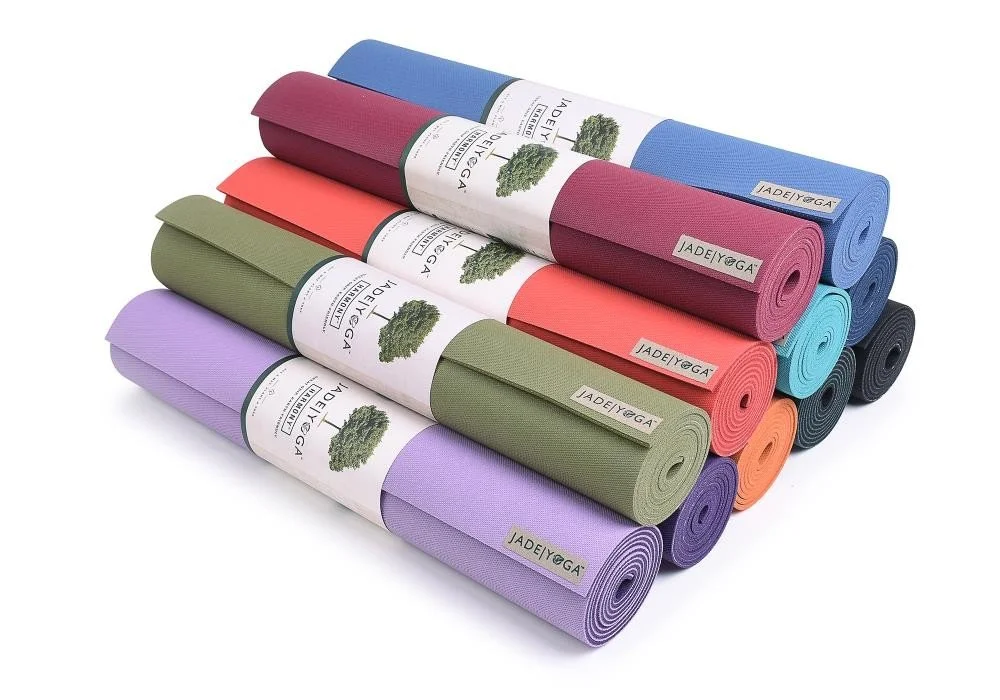
Image from www.yogaonthevine.com.
Choosing the right size and color isn’t merely aesthetic—it can actually influence your practice experience. A properly sized mat creates the confidence of knowing your hands and feet will stay on your mat during expansive movements, while color can subtly affect your mood and energy during practice. The thoughtfulness behind these options demonstrates JadeYoga’s understanding that every practice and practitioner is unique.
Length Options for Different Body Types
The standard Jade Harmony measures 68 inches long by 24 inches wide—dimensions that accommodate most practitioners comfortably. For taller yogis or those who simply prefer more space, the 74-inch extended length option provides additional room without changing the familiar width. The extra-wide version (Harmony XW) measures 28 inches across, offering approximately 17% more surface area—ideal for broader-shouldered practitioners or those who enjoy more freedom of movement.
The 10 Color Palette Choices
JadeYoga offers the Harmony in a rainbow of options that go beyond the standard yoga mat colors. From calming Midnight Blue and Olive to energizing Tibetan Orange and Fire Engine Red, the spectrum allows you to choose a mat that resonates with your energy preferences. The colorful options use non-toxic dyes that maintain the mat’s eco-friendly credentials while offering visual appeal that stands out in a crowded yoga studio.
Many practitioners find that color choice affects their psychological approach to practice. Cooler tones like Slate Blue and Jungle Green can promote calmness and introspection—ideal for restorative or meditative practices. Warmer tones like Sedona Red and Tibetan Orange may help energize a morning practice or boost motivation during challenging sequences. The color becomes part of your practice experience, subtly influencing your mood each time you unroll your mat! For more insights, check out this Jade Harmony Yoga Mat Review.
How the Jade Harmony Performs Across Different Yoga Styles
The versatility of the Jade Harmony becomes apparent when testing it across various yoga disciplines. Its performance characteristics adapt remarkably well to different practice needs, from dynamic movement to static holds. This adaptability makes it an excellent choice for practitioners who enjoy exploring multiple yoga styles rather than specializing in just one approach.
While some specialty mats excel in specific contexts but falter in others, the Harmony maintains consistent performance across disciplines. This versatility eliminates the need for multiple mats for different classes, simplifying your yoga gear collection while ensuring reliable performance regardless of which style you practice on any given day.
Vinyasa Flow: Stability During Transitions
During dynamic Vinyasa sequences, the Harmony’s grip truly shines. Quick transitions between poses that challenge stability—like moving from Warrior II to Half Moon—become more accessible when your mat works with you rather than against you. The natural rubber provides just enough resistance to help you ground through your foundation while maintaining the mobility needed for fluid movement.
The mat’s weight (approximately 5 pounds for the standard size) contributes to its stability during flow practice. Unlike lighter mats that can shift during dynamic sequences, the Harmony stays firmly in place throughout your practice. This stability becomes particularly valuable during jump-throughs and jump-backs, where mat movement can disrupt your flow and concentration.

Image from www.everydayyoga.com.
Hot Yoga: Sweat Absorption and Traction
In heated environments where sweat becomes a significant factor, the Harmony’s open-cell rubber structure absorbs moisture rather than allowing it to pool on the surface. This absorption mechanism maintains traction even as perspiration increases throughout class. The confidence this provides allows for deeper exploration of challenging poses without the distraction of potential slipping.
While some practitioners use towels with their mats during hot yoga, many Harmony users find they can practice towel-free even in the sweatiest conditions. This simplifies your practice setup and eliminates the distraction of adjusting a towel mid-sequence. The mat’s performance in heated conditions actually improves with regular use, as the surface develops a slightly more refined texture that enhances its grip characteristics.
Yin and Restorative: Comfort for Long Holds
The 5mm thickness of the Harmony provides adequate cushioning for longer-held Yin and restorative postures without requiring additional props for comfort. The natural rubber offers a different quality of support than foam mats—firmer but somehow more responsive to body contours. This creates comfortable support for sensitive areas like hip bones and sacrum during extended floor poses.
The thermal properties of natural rubber make the Harmony particularly suited to these slower practices. The material warms quickly to body temperature, creating a more inviting surface for settled postures compared to synthetic mats that can remain cool to the touch. This subtle warmth supports deeper relaxation in restorative practices and more comfortable opening in yin postures.
Price Point and Value Analysis
At approximately $85-$100 for the standard size, the Jade Harmony mat represents a premium investment compared to entry-level yoga mats. However, analyzing value requires looking beyond initial cost to consider longevity, performance benefits, and alignment with personal values. When evaluated through this broader lens, the Harmony offers compelling value despite its higher price point.
The durability factor alone justifies the investment for regular practitioners. While budget mats might need replacement every 6-12 months with frequent use, the Harmony typically serves faithfully for 2-5 years depending on practice intensity and care routines. This longevity effectively reduces the per-use cost to pennies for dedicated yogis who practice several times weekly. For those looking to make the most out of their investment, consider exploring these creative uses for old yoga mats once it’s time for a replacement.
Comparing Cost to Conventional PVC Mats
Entry-level PVC mats typically cost $20-40, making them initially more accessible than the Harmony’s higher price tag. However, these cheaper alternatives often lack essential performance features like reliable grip and appropriate cushioning. Many practitioners who start with budget mats ultimately upgrade after experiencing limitations or premature deterioration, effectively paying twice rather than investing once in a quality product.
Beyond performance considerations, the environmental cost of disposable PVC mats adds a hidden expense not reflected in the price tag. These synthetic mats can take centuries to decompose in landfills while leaching chemicals throughout their breakdown process. The Harmony’s biodegradable natural rubber and sustainable production methods represent value that extends beyond personal benefit to include environmental responsibility.
Longevity Factor: When Spending More Saves Money
When calculated on a cost-per-use basis, the Jade Harmony often proves more economical than budget alternatives for committed practitioners. A $25 mat that needs replacement after six months of regular practice actually costs more per session than an $85 Harmony that serves faithfully for years. This longevity factor becomes particularly relevant for those who practice frequently or attend studio classes where mat transportation causes additional wear.
The Harmony’s durability comes from both material quality and construction techniques. The dense natural rubber resists the compression and surface degradation that quickly renders cheaper mats unusable. The precision manufacturing processes ensure consistent thickness and structural integrity throughout the mat, preventing the uneven wear patterns that often lead to premature replacement of lower-quality options.
Care Instructions for Maximum Lifespan
Proper maintenance significantly extends the useful life of your Jade Harmony mat while preserving its performance characteristics. Natural rubber requires different care than synthetic materials, with some specific considerations that protect your investment. Following JadeYoga’s care recommendations ensures your mat remains a reliable practice partner for years rather than months.
The most important care principles involve cleaning frequency, storage practices, and environmental awareness. Regular but gentle cleaning prevents practice residue from affecting grip, proper storage prevents structural damage, and environmental mindfulness protects the natural rubber from its few vulnerabilities. These simple habits quickly become second nature while significantly extending your mat’s functional lifespan.
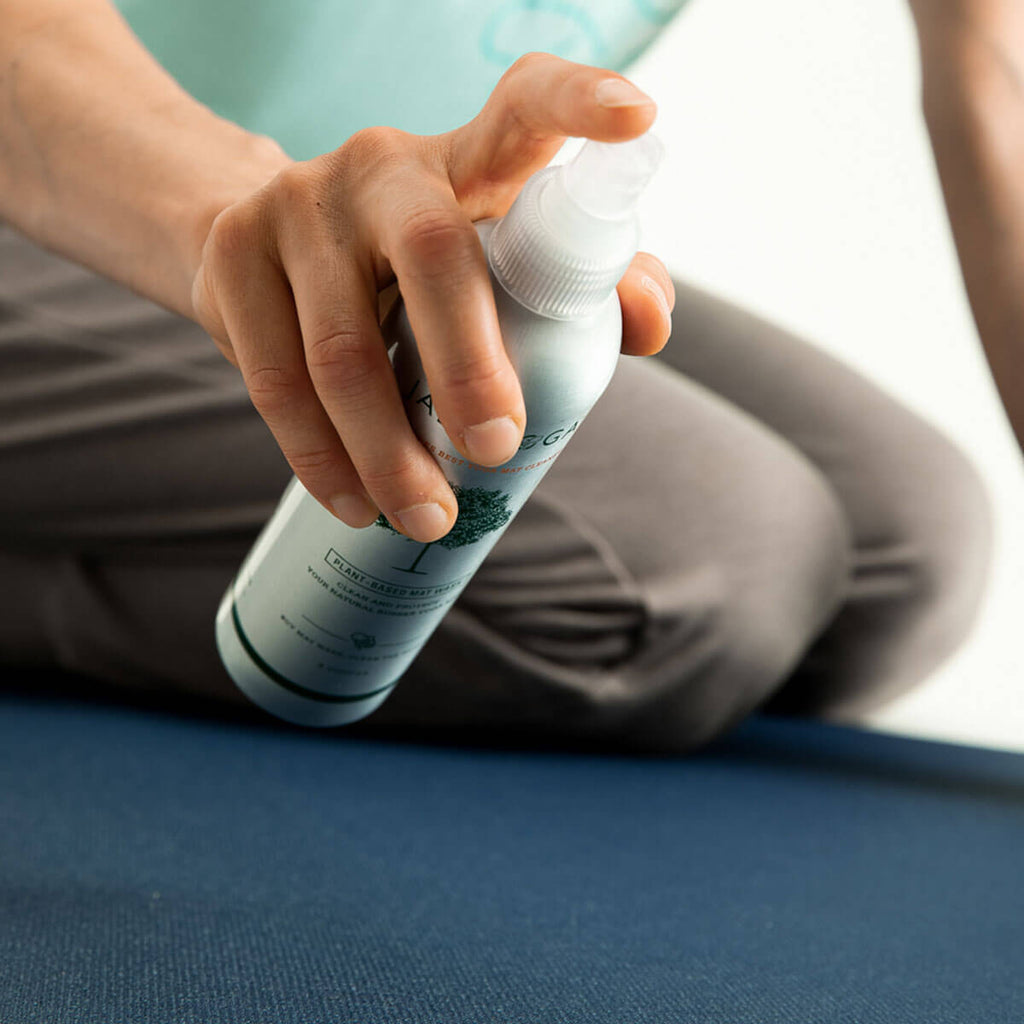
Image from jadeyoga.com.
Natural Cleaning Solutions for Your Natural Mat
Clean your Harmony mat regularly with a simple solution of mild soap and water. A 4:1 ratio of water to gentle dish soap in a spray bottle provides effective cleaning without harsh chemicals that might damage the natural rubber. After spraying lightly, wipe with a non-abrasive cloth and allow to dry completely before rolling—typically 15-30 minutes depending on humidity levels.
Avoid commercial yoga mat cleaners unless specifically approved for natural rubber, as some contain essential oils or alcohol that can degrade the material over time. Similarly, avoid submersing your mat or using excessive water, which can penetrate the open-cell structure and potentially cause deterioration from within. For deeper cleaning sessions, JadeYoga recommends using a bathtub with cool water and mild soap, followed by thorough air drying before storage.
Sun Exposure Warning: Why Direct Sunlight Damages Rubber
Natural rubber’s greatest vulnerability is prolonged sun exposure, which can cause oxidation, color fading, and eventually surface cracking. UV rays break down the rubber’s molecular structure, compromising both appearance and performance. Never leave your Harmony mat in direct sunlight or in hot cars, where interior temperatures can accelerate this deterioration process.
Even indirect sunlight can gradually affect your mat, so choose storage locations away from windows with strong light exposure. When practicing outdoors, minimize direct sun contact by using your mat in shaded areas and promptly storing it after practice. These simple precautions protect against the most common cause of premature aging in natural rubber mats.
Storage Tips to Prevent Cracking
Store your Harmony mat loosely rolled rather than tightly wound to prevent stress on the rubber structure. Tight rolling creates tension that can eventually lead to surface cracking, particularly along fold lines. When possible, allow the mat to rest unrolled between uses, which helps it maintain its natural flat state and prevents compression lines from becoming permanent.
Keep your mat in a cool, dry location away from heat sources, which can cause the rubber to become brittle over time. Avoid storing in basements or areas with high humidity, which can promote mildew growth within the open-cell structure. If you use a mat strap for transportation, loosen it during home storage to minimize compression stress on the rolled mat.
Jade Harmony vs. Other Eco-Friendly Mats
The eco-friendly yoga mat market has expanded significantly in recent years, offering more options for environmentally conscious practitioners. Comparing the Jade Harmony mat with other sustainable alternatives reveals important differences in performance characteristics, environmental impact, and user experience. Understanding these distinctions helps determine which eco-friendly option best aligns with your specific practice needs and values.
While all sustainable mats offer environmental benefits compared to conventional PVC options, they vary considerably in grip, durability, cushioning, and maintenance requirements. The Harmony’s natural rubber construction creates a distinctive performance profile that particularly excels in traction and responsiveness, though other materials offer unique advantages in different practice contexts.
Manduka eKO Comparison
The Manduka eKO mat represents the Harmony’s closest competitor in the natural rubber category, with similar environmental credentials and price point. The eKO offers a slightly more structured feel with a sealed-cell surface that repels moisture rather than absorbing it like the Harmony. This makes the eKO somewhat easier to clean but potentially less grippy in sweaty conditions where the Harmony’s absorption mechanism excels.
Cork Alternatives: Pros and Cons
Cork yoga mats provide another sustainable option with distinctive performance characteristics. Cork’s natural antimicrobial properties resist odor development better than rubber, while its grip actually improves with moisture—making it excellent for hot yoga. However, cork typically offers less cushioning than the Harmony’s 5mm rubber and may feel initially slippery in dry conditions before warming up.
Cork mats typically combine a natural rubber or TPE base layer with a cork surface, creating a heavier composite construction compared to the Harmony’s pure rubber composition. While this layered approach can provide excellent performance, it sometimes leads to separation issues over time that don’t affect the Harmony’s homogeneous construction. Cork also tends to show wear patterns more visibly than rubber, though this affects aesthetics more than functionality.
Who Should Choose the Jade Harmony Mat
The Jade Harmony mat represents an ideal choice for practitioners serious about both their yoga practice and environmental impact. Its premium price point makes most sense for regular practitioners who will benefit from its superior grip and durability through frequent use. The investment delivers particular value for those who practice varied yoga styles and need versatile performance across different contexts.
Beyond practice frequency, your individual priorities and preferences play a crucial role in determining whether the Harmony represents your optimal mat choice. Some performance characteristics—particularly its exceptional grip—make it especially suitable for specific practitioner profiles, while certain limitations may suggest alternative options for others.
Best for Practitioners with Latex Tolerance
As a natural rubber product, the Jade Harmony mat contains natural latex proteins that may trigger reactions in people with latex allergies or sensitivities. Those with known latex issues should choose alternative materials like cork, cotton, or TPE that provide sustainable options without allergenic potential. If you’re unsure about latex sensitivity, consider testing a small area of skin with brief mat contact before committing to full practice sessions.

Image from www.amazon.com.
Perfect for Those Prioritizing Grip
Practitioners who value secure hand and foot placement above all other mat characteristics will find the Harmony’s grip capabilities unmatched by most alternatives. This superior traction particularly benefits those exploring challenging arm balances, inversions, or flowing sequences where slippage could compromise safety or disrupt practice flow. The confidence provided by reliable grip often allows practitioners to progress more quickly in poses requiring substantial stability.
- Power yoga practitioners who generate significant heat and moisture
- Those working on arm balances and inversions requiring unwavering stability
- Practitioners with naturally sweaty hands and feet
- Teachers who demonstrate dynamic sequences requiring confident transitions
The grip advantage becomes most apparent during challenging transitions and holds where other mats might become treacherous. Moving from Downward Dog to Plank, holding Warrior poses with precise foot alignment, or exploring handstand variations all become more accessible when your mat provides unwavering support. This reliability creates mental space to focus on breath and alignment rather than compensating for an unstable foundation.
Even for beginners, the Harmony’s grip security can accelerate progress by eliminating one common source of frustration and distraction. The confidence of knowing your hands and feet will stay precisely where you place them allows newer practitioners to develop proper alignment habits without the counterproductive adjustments sometimes required to compensate for slippery mats.
Best for Yogis Ready to Invest in Sustainability
The Harmony represents an investment in both performance and environmental responsibility. For practitioners who prioritize minimizing their ecological footprint, JadeYoga’s commitment to sustainable materials, domestic manufacturing, and reforestation creates alignment between practice values and purchasing decisions. The satisfaction of practicing on a mat that reflects conscious consumption principles adds an intangible but meaningful dimension to your yoga experience.
This sustainability commitment extends beyond materials to include the company’s broader environmental initiatives. JadeYoga’s partnerships with conservation organizations and carbon-offset programs demonstrate a holistic approach to environmental stewardship that resonates with practitioners seeking to support businesses that share their values. For many, this alignment justifies the premium price point as an investment in both personal practice and planetary wellbeing.
- Environmentally conscious practitioners seeking alignment between values and gear
- Those willing to invest more upfront for longer-term durability
- Practitioners who appreciate the tactile experience of natural materials
- Yogis committed to supporting businesses with transparent sustainability practices
The mat becomes not just a practice tool but a daily reminder of your commitment to treading lightly on the earth! This mindful consumption approach often extends beyond yoga equipment to influence other purchasing decisions, creating a positive ripple effect that amplifies your environmental impact far beyond the mat itself.
Your Green Practice Goes Beyond the Mat
Choosing the Jade Harmony mat represents just one aspect of developing an environmentally conscious yoga practice. This mat can serve as a gateway to examining other dimensions of your yoga journey through a sustainability lens. From the props you use to the clothing you wear to the way you transport your gear, each element offers opportunities to reduce environmental impact while enhancing your practice experience.
The most profound aspect of green yoga extends beyond equipment to the philosophy underlying your practice. The yogic principle of ahimsa (non-harm) naturally encompasses environmental stewardship, creating coherence between ancient wisdom and modern sustainability challenges. Your Jade Harmony becomes not just a tool for your yoga practice but a daily reminder of your commitment to practicing in harmony with the planet that sustains us all!
Frequently Asked Questions
Below are answers to common questions about the Jade Harmony yoga mat, addressing specific concerns about material properties, care requirements, and performance characteristics. These practical insights help set appropriate expectations and ensure you maximize your experience with this premium eco-friendly mat.
Is the Jade Harmony Mat Safe for People with Latex Allergies?
- The Jade Harmony contains natural rubber, which includes latex proteins that can trigger allergic reactions
- Those with known latex allergies should avoid this mat and consider cork, cotton, or TPE alternatives
- Mild latex sensitivities sometimes manifest as skin irritation during extended contact
- If unsure about sensitivity, test by touching a small area of the mat to inner wrist before full use
Latex allergy severity varies widely among individuals, from mild skin irritation to potentially serious respiratory reactions. While the manufacturing process reduces free latex proteins compared to raw rubber, enough remains to potentially trigger sensitive individuals. JadeYoga transparently acknowledges this limitation rather than claiming their processing eliminates all allergenic potential.
For practitioners with mild sensitivity who strongly prefer the Harmony’s performance characteristics, using a thin cotton yoga towel as a barrier layer sometimes provides sufficient protection. However, those with more severe latex allergies should prioritize safety by choosing entirely different materials, regardless of the performance benefits the Harmony might otherwise offer.
If you develop unexplained skin irritation after using your Harmony mat, discontinue use and consult a healthcare provider to determine whether latex sensitivity might be the cause. Symptoms typically appear within minutes to hours of contact and may include redness, itching, or small bumps in areas that touched the mat surface.
How Long Does the Jade Harmony Mat Typically Last with Regular Use?
With proper care, the Jade Harmony typically serves 2-5 years of regular practice before performance decline necessitates replacement. The actual lifespan varies considerably based on practice frequency, style intensity, cleaning habits, and storage conditions. Practitioners who primarily enjoy gentle styles like Yin or Restorative often report longer usable lifespans than those practicing vigorous Vinyasa or hot yoga exclusively.
The end of a Harmony mat’s useful life usually arrives gradually rather than catastrophically. Surface texture smooths progressively, grip performance gradually diminishes, and the rubber may develop more permanent compression patterns. These changes occur slowly enough that you’ll have ample time to recognize when replacement becomes necessary rather than experiencing sudden failure during practice.
Some practitioners report successfully extending their mat’s functional lifespan by rotating it regularly (changing which end faces the front of your practice space) to distribute wear more evenly across the surface. This simple habit prevents the formation of concentrated wear patterns in areas that receive the most frequent hand and foot placement, particularly in repeated sequences like Sun Salutations.
- 2-3 years for daily practitioners with high-intensity styles
- 3-5 years for moderate practice schedules with varied intensity
- 5+ years possible with gentle practices and meticulous care
- Environmental factors like humidity and temperature affect longevity
Can I Use the Jade Harmony Mat on Carpet or Rough Outdoor Surfaces?
The Jade Harmony performs best on smooth, flat surfaces like hardwood, tile, or concrete floors. While it can be used on low-pile carpet, the uneven foundation may affect stability during balancing poses and potentially cause uneven wear on the mat’s bottom surface. For carpeted practice areas, consider placing a rigid yoga board beneath your mat to create a more stable foundation, particularly for balance-intensive practices.
Does the Natural Rubber Smell Go Away Over Time?
The distinctive natural rubber aroma of a new Jade Harmony mat gradually dissipates over the first few weeks of use and regular airing. This scent—often described as earthy or similar to new tires—comes from the natural compounds in rubber rather than artificial chemicals or processing agents. Most practitioners find the intensity diminishes significantly after 3-4 weeks, though a subtle rubber scent remains as an inherent characteristic of the natural material.
Is the Jade Harmony Mat Recyclable at the End of its Life?
While natural rubber is theoretically biodegradable, the Jade Harmony isn’t readily recyclable through conventional municipal programs due to its density and the processing required to break it down efficiently. JadeYoga recommends repurposing retired mats for non-yoga uses like gardening kneelers, pet cushions, or protective padding rather than sending them to landfill. Some practitioners cut old mats into smaller pieces to use as targeted joint cushioning or to protect floors under furniture. Here are some more great ideas for upcycling your yoga mat at the end of its useful lifespan.
For those committed to finding the most environmentally responsible end-of-life solution, some specialized recycling programs do accept natural rubber yoga mats, though these services aren’t universally available. JadeYoga continues working toward developing more comprehensive take-back and recycling options as part of their ongoing environmental commitment.
Featured Image from www.amazon.com.


